Open Robotics and AI Software Deliver Novel Apps Faster than Ever
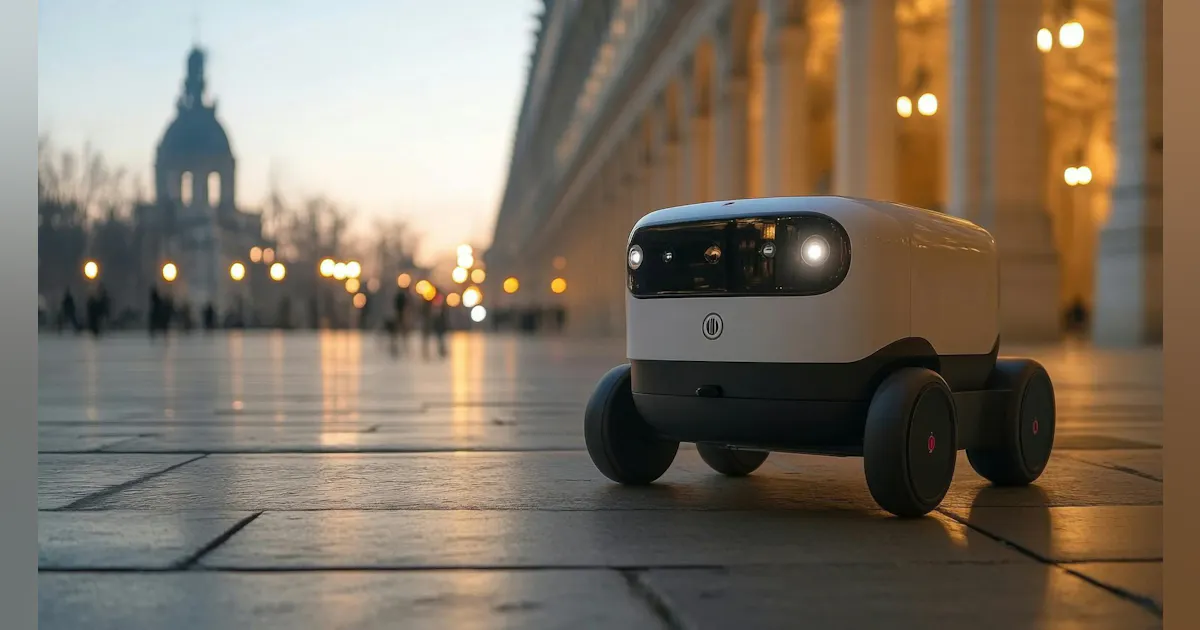
Hand signals provide a mechanism for controlling these vehicles in a simple and efficient way. A combination of open software and hardware can bring the AI support needed to interpret hand signals made in front of a camera and deliver commands to a robot’s motion systems.
Thanks to projects that include Google’s dataset for ASL, the source material is often readily available. Users have the option to take models derived from these challenges or use the datasets to train models with architectures appropriate to their use cases as long as the materials are provided in the form of free or open-source software.
Tools such as the AMD Vitis Unified Software Platform make it easy to access both the processing performance and software environments that can host this open-source code, which is often written in TensorFlow Lite, PyTorch, or other open AI development environments.
The Vitis platform lets engineers develop C/C++ application code, as well as IP blocks that target AMD’s multiprocessor system-on-chip (MPSoC). The solution can then be deployed using off-the-shelf or custom single-board computers (SBCs), such as the Tria ZUBoard 1CG, which is based on the Zynq UltraScale+ MPSoC.
These high-performance devices combine multicore processors based on the Arm Cortex-A architecture with an array of programmable-logic cells. The resulting hardware not only delivers the performance needed to run robotics applications that need AI support, it also incorporates programmable logic that’s highly suited to implementing sophisticated motor-control algorithms.
Open-Source Robots via the Robot Operating System (ROS)
Support for robot control is just as accessible now thanks to the creation of the Robot Operating System (ROS). Originally pioneered by a group at Stanford University, it’s now managed by the Open Source Robotics Foundation (OSRF).
The release of ROS2 saw a change in capabilities that makes the software a viable choice for industrial control and commercial drone operation due to its inclusion of features for real-time motion processing and security. AMD ported the ROS2 code to the PetaLinux operating system that runs on the MPSoC hardware to ease integration for customers.
With ROS2, developers build robotics applications using easy-to-understand graphs arranged in a publisher-subscriber flow, a design pattern that’s commonly applied to industrial and automotive control systems. In these graphs, providers of data and inputs are treated as publisher nodes that pass information on specific topics to subscriber nodes acting on them.
The structure allows for the easy integration of the modules needed to assemble a working robotic system. Cameras attached to standard MIPI interfaces can deliver to nodes running image-processing software, such as OpenCV that’s able to adjust brightness and contrast and perform other enhancement functions, a succession of high-quality frames to an image-classification model. The model then publishes textual outputs that are consumed by the motion-control software employed by the robot.
In the case of this ASL-based application, fingerspelled letters tell the robot to turn, advance, and stop. Once assembled, compiled, and downloaded to the robot, the application need not be regarded as static.
The rapid pace of development in open-source AI and robot-control software provides opportunities for developers to optimize their systems. Tria’s original demonstration of an ASL-controlled robot used a hand-signal classification model based on the VGG-16 architecture and trained on Google’s dataset.
A decade ago, researchers in the Visual Geometry Group at the University of Oxford developed this popular deep convolutional neural network (CNN) to provide good accuracy on a wide range of image-recognition tasks. A key advantage of VGG-16 lies in its stack of convolutional layers followed by a series of max-pooling layers of reducing dimensions but higher depth. This helps the model learn hierarchical representations of visual features. Such an attribute is suitable for hand-sign recognition, where the model needs to first detect a valid hand shape in the camera frame and from that determine the arrangement of the fingers representing an ASL character.
Though VGG-16 offers good performance and demonstrates the viability of the prototype, any embedded platform benefits from higher efficiency. Tria’s developers obtained this by swapping VGG-16 for the more recent MobileNet V2 classifier. It’s an architecturally more complex stack of over 100 convolutional, pooling, and so-called bottleneck layers (Table 1).
link