


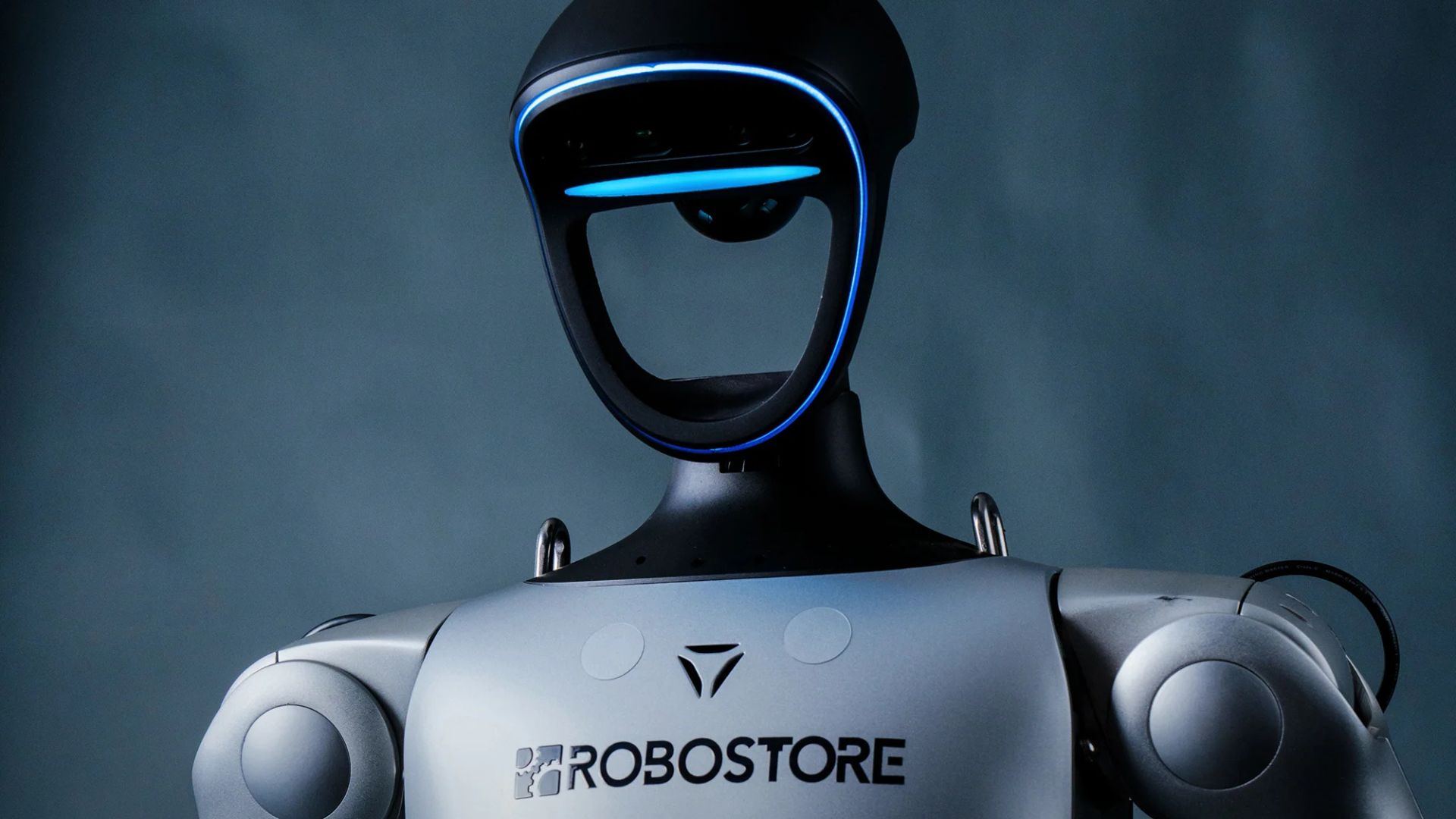
A humanoid robot has delivered one of the year’s most unusual takes on the AI boom—on live television.
During a CNBC segment this week, a Unitree G1 robot known as KOID was asked whether the surge in artificial intelligence is a bubble. Its response was carefully neutral, saying only time will tell.
The moment highlighted the growing presence of Chinese humanoid robotics firms, which are already deploying real machines, even as global debates continue over AI’s long-term trajectory and impact.
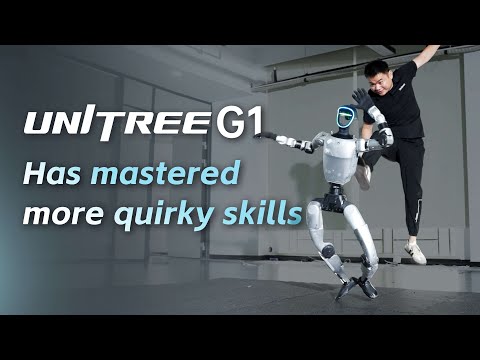
Recently, a Unitree G1 demo went viral after an operator forgot the robot’s mirrors, accidentally kicking himself during a martial arts move as the humanoid copied him.
Robot weighs in
A humanoid robot has unexpectedly entered one of the technology sector’s most heated debates. During a recent CNBC broadcast, KOID was asked whether today’s artificial intelligence surge represents lasting change or a speculative bubble.
“We might see a lot of excitement around AI right now, but whether it’s a bubble or just a transformative wave, is something only time will tell,” KOID said, as reported by CNBC.
The robot’s answer was measured and cautious, reflecting the uncertainty that continues to divide the industry. The response echoed the careful language often heard from corporate leaders, underscoring how closely humanoid robotics is now intertwined with broader AI narratives.
KOID is produced by Unitree, a fast-growing Chinese robotics firm that has moved beyond lab demonstrations to real-world deployments. Its appearance on mainstream financial television highlighted a growing contrast in the global robotics landscape.
While some high-profile humanoid projects remain largely conceptual, Chinese manufacturers are increasingly delivering working systems to customers, reports The Tech Buzz.
The interview itself served as a signal of how far humanoid technology has progressed—from experimental novelty to a serious market topic. At the same time, it reinforced the central tension surrounding AI today: rapid technical advances, expanding commercial use, and unanswered questions about long-term value and expectations, reports CNBC.
Humanoid market heats up
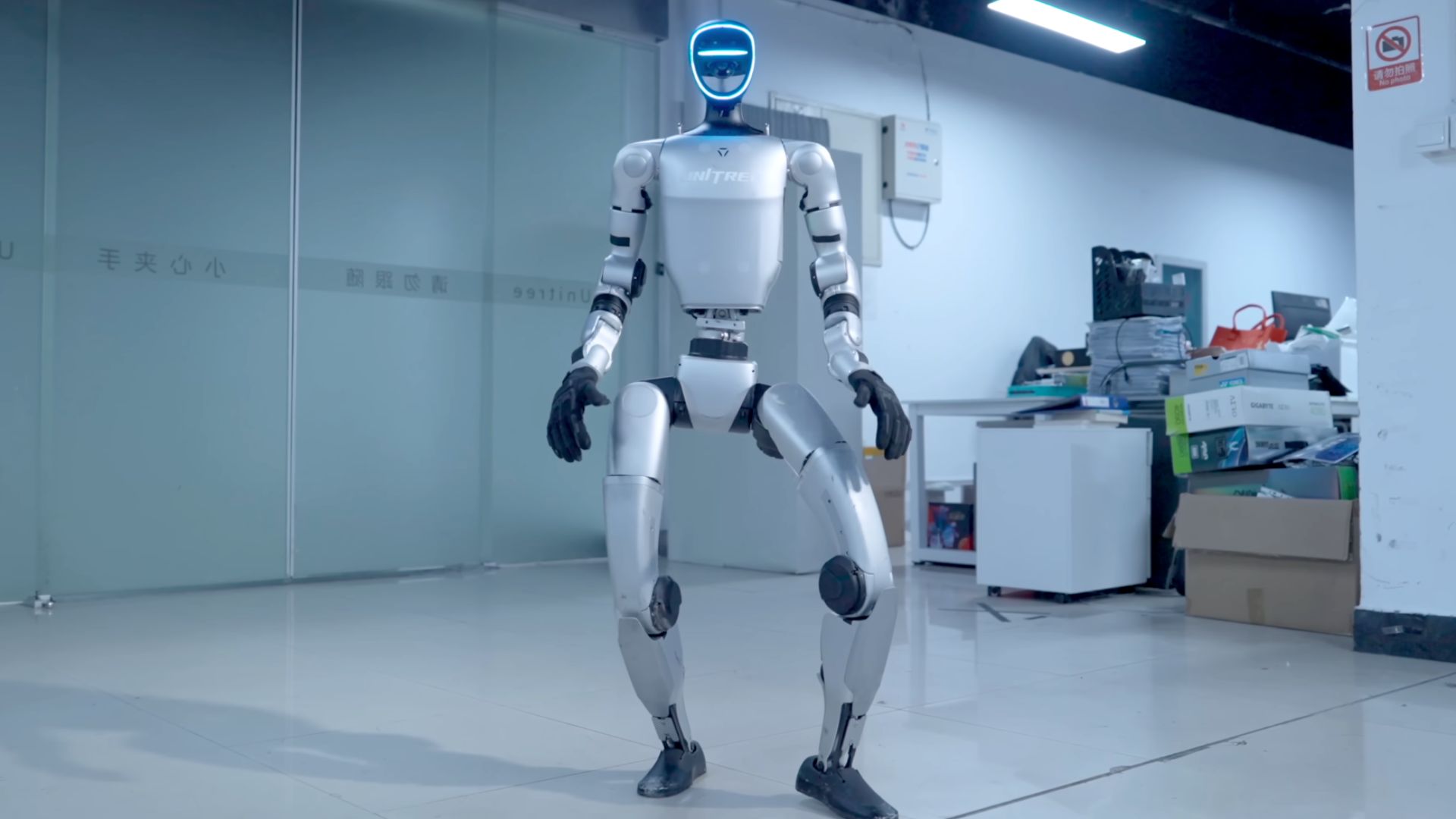
The Unitree G1 humanoid robot, weighing about 77 pounds and featuring 23 degrees of freedom, allows independent movement across multiple joints. This design enables full-body actions ranging from coordinated dance routines to controlled boxing-style motions. The G1 platform reflects Unitree’s focus on highly mobile, general-purpose humanoid systems rather than single-task machines.
According to CNBC, the robot is available for purchase in the United States through RoboStore, Unitree’s largest US distributor, with prices ranging from $8,990 to $128,900, depending on configuration and capabilities.

Despite its advanced movement and programmability, the broader humanoid robotics sector remains in a prototyping phase, as developers continue to evaluate practical roles for robots in everyday environments, including domestic assistance, industrial support, and manufacturing applications.
According to RoboStore CEO, Teddy Haggerty, KOID presents a forward-looking view of humanoid deployment, suggesting that robots will become increasingly versatile and more deeply integrated into daily life. Future use cases are anticipated to span both home and industrial settings, where humanoids could improve efficiency and reduce physical workload.

Competition in the humanoid robotics space has intensified over the past year, with firms such as Boston Dynamics and Agility Robotics advancing their platforms. While Tesla’s Optimus has drawn significant attention, it has not yet reached commercial availability.
In contrast, Chinese manufacturers have accelerated production efforts, with Unitree emerging as a leading player. The company has demonstrated strong performance at international robotics events and recently introduced its H2 humanoid model while progressing toward a potential initial public offering valued at up to $7 billion, CNBC reports.
link